The Enigmatic Huia Skull: A Tale of Form, Function, and Fate
Introduction
New Zealand’s extinct huia (Heteralocha acutirostris) captivated scientists and Māori alike with its striking appearance and remarkable skull adaptations. Among all known birds, the huia exhibited the most extreme difference in beak shape between male and female. This sexual dimorphism was so pronounced that early naturalists initially mistook the sexes for separate species. In this narrative, we explore how the anatomy of the huia’s skull and beak suited its forest lifestyle, why males and females evolved such different tools for feeding, and how these traits parallel other avian specialists. We’ll also delve into the bird’s behavior and tragic extinction.
Two Birds, Two Beaks: Anatomy and Adaptation
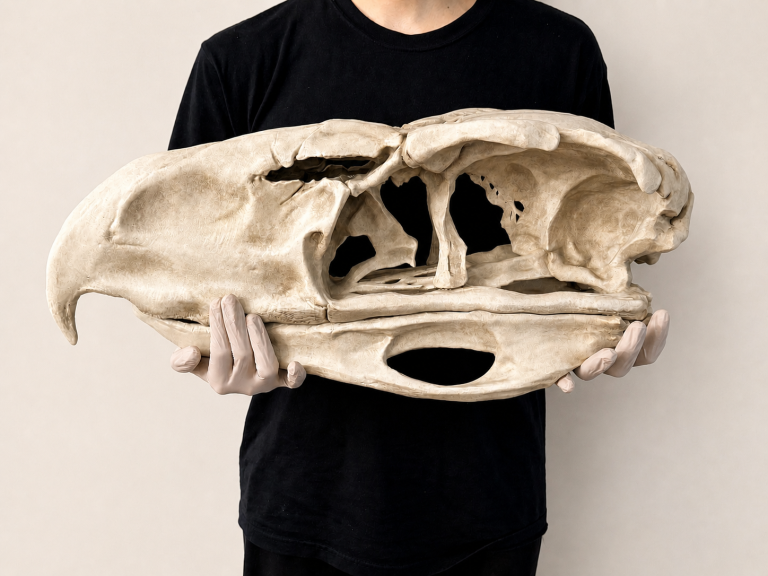
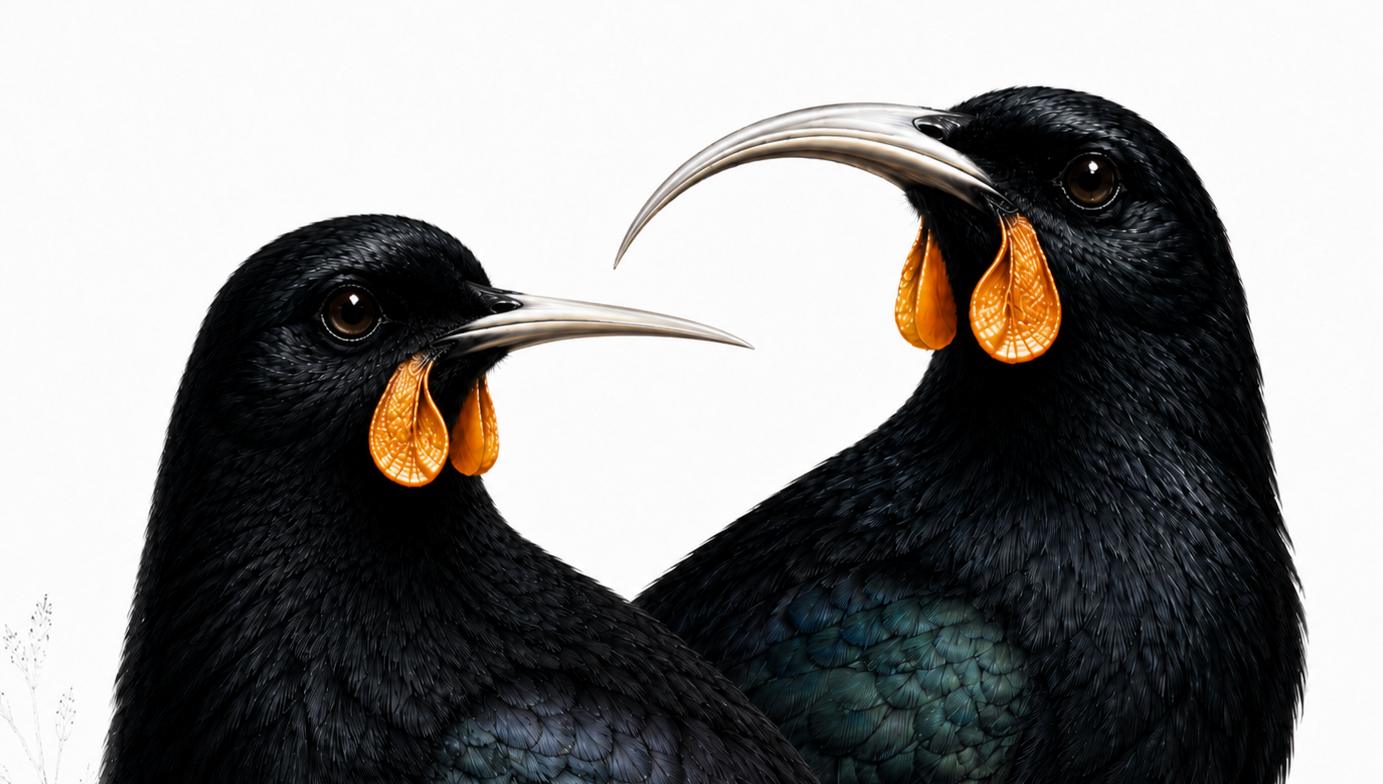
One glance at a huia pair revealed an extraordinary difference. Female huias had a long, slender, down-curved bill, almost sickle-like, whereas males bore a shorter, stouter, and nearly straight bill. The female’s bill could reach about 100 mm in length, roughly 60% longer than the male’s ~60 mm bill. These bills were not only different in shape but anchored to skulls with distinct musculature and structure, each optimized for a specific feeding technique. The male’s skull was robust, supporting strong jaw muscles for forceful biting and prying, while the female’s skull was more gracile, built to wield her delicate curving beak like a probe.
In the lush lowland and montane forests of 19th-century New Zealand, these adaptations allowed male and female huias to become a perfect foraging duo. Male huia acted a bit like woodpeckers, using their sturdy bills to chisel and gouge into decaying wood. They would hammer into rotting logs or tree trunks, cracking apart softer portions of wood in search of insects. In fact, observers noted that a male huia could pry open partially rotten wood by inserting his bill and forcefully opening his jaws. This behavior is known as “gaping” or prying. This exposed the tunnels and larvae hidden under bark or deep in logs.
Female huia, by contrast, excelled at precision retrieval. Her long, curved beak was perfectly suited to probe into crevices and deep burrows that the male’s beak, or even many other insect-eating birds, could not reach. For instance, after a male had chiseled into a rotten branch, the female could slide her slender bill into the remaining narrow holes and extract fat insect larvae from within. Much like a surgical tool reaching where brute force could not. One 19th-century account by Sir Walter Buller, who kept a huia pair in captivity, described how the female would “accomplish with her long slender bill what [the male] had failed to do” in reaching a grub, invariably keeping the prize for herself!
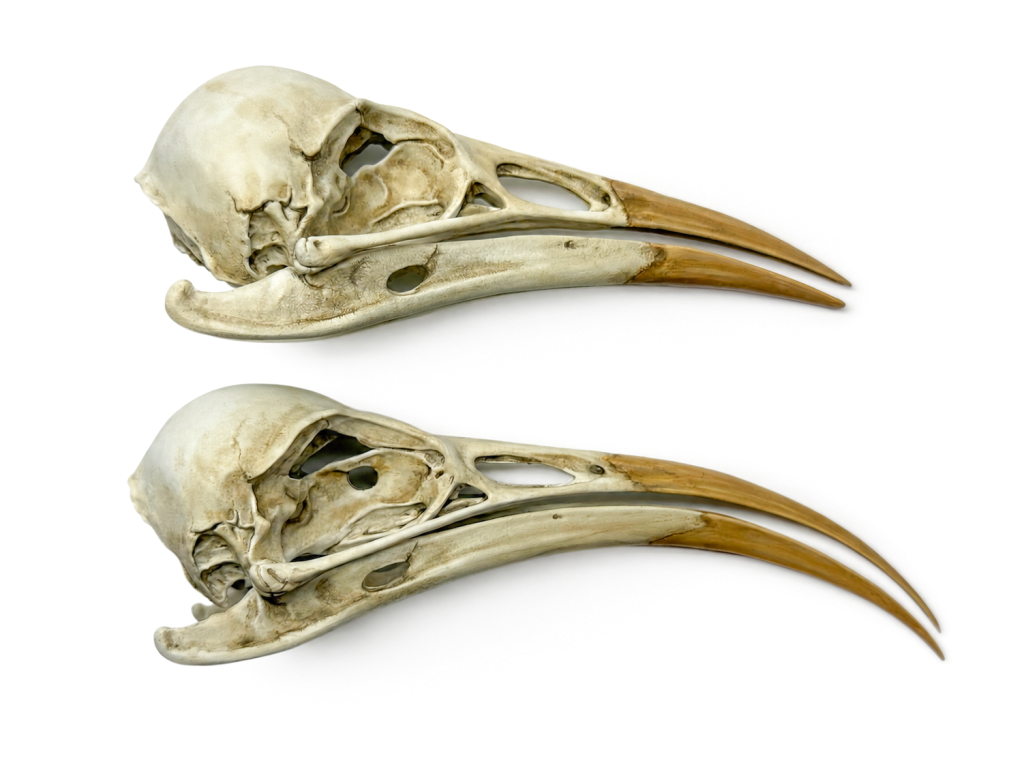
This complementary feeding strategy meant that male and female huias could exploit a single fallen log in two distinct ways. Males focused on softer, decayed patches where chiseling was effective, while females probed harder-to-reach insect tunnels that resisted the male’s blunt force. Essentially, each sex tapped into different “compartments” of the insect larder hiding under the bark. Both primarily dined on the abundant larvae of wood-boring beetles, such as huhu grubs, and other invertebrates, but their techniques gave them access to prey at different depths. This niche partitioning within a species is believed to have evolved to reduce competition for food between the sexes. By each specializing, a mated pair could forage side by side without depleting one another’s resources. The female’s bill even had a slight flexibility or pliant quality to navigate tight bends in wood tunnels.
Beyond insects, huia were omnivorous. Their skull and beak anatomy still allowed for dietary variety. Both sexes supplemented their insect diet with spiders and the berries of native forest plants. But even here, their differing bill shapes likely influenced how they fed. The male’s crow-like beak could pry open fruit or strip bark to expose spiders, while the female’s could probe leaf litter or among vine tangles for small fruits. In essence, the huia’s skulls were multi-tools fine-tuned over millennia, and those spectacular bills served a very specialized purpose in the ancient forests of Aotearoa.
Life in the New Zealand Forest
Huias were not only notable for their skulls but also for their distinctive behaviors and place in the ecosystem. They were roughly the size of a large magpie: females about 48 cm in total length (owing in part to that long bill) and males around 45 cm. Their plumage was an iridescent greenish-black with bold white tips on the tail feathers, and both sexes sported bright orange facial wattles at the base of the bill. These wattles are a family trait of New Zealand wattlebirds (Callaeidae) and may have played a role in courtship display or social signaling, although their exact function remains a mystery.
Flight in the huia was said to be weak and undulating; they were not long-distance fliers. Instead, they moved through their dense forest home predominantly by hopping and bounding through the branches and along the ground. Early observers described huia bounding in powerful leaps, aided by strong legs and a long tail used for balance, behaviors reminiscent of some tree-dwelling mammals more than typical perching birds. This agile scrambling allowed them to cover ground and trees efficiently as they searched for food under bark and in leaf litter.
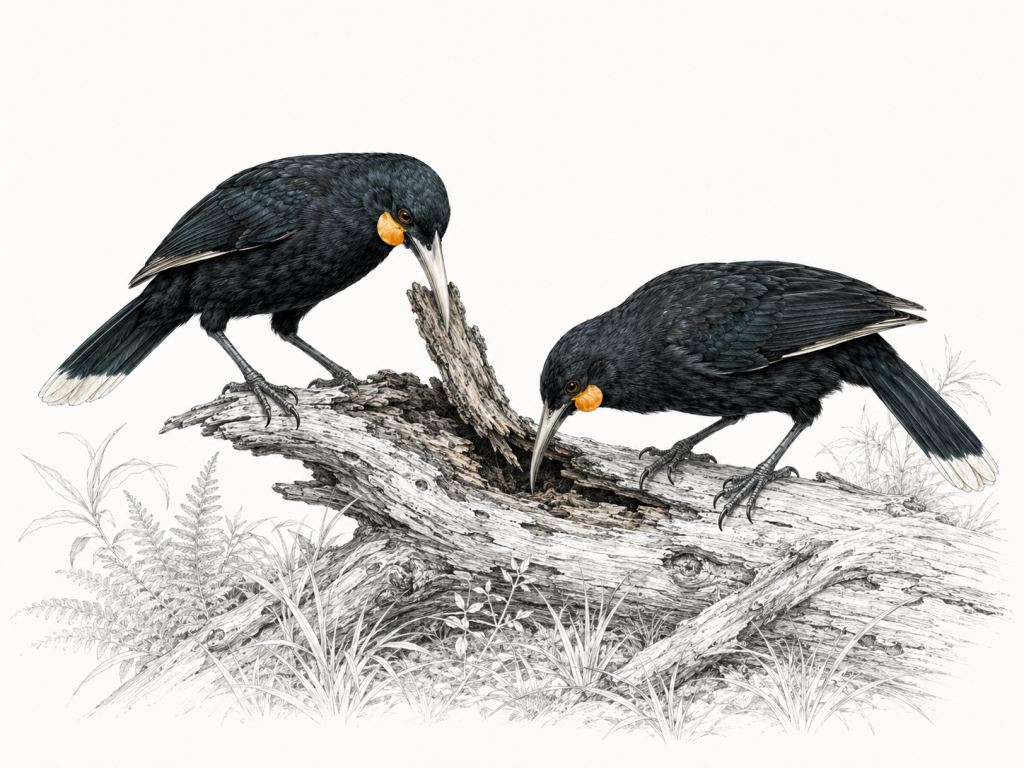
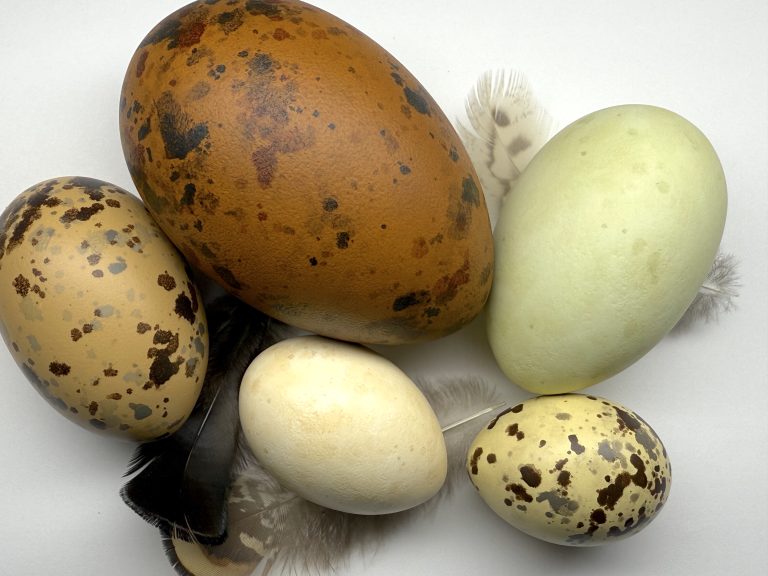
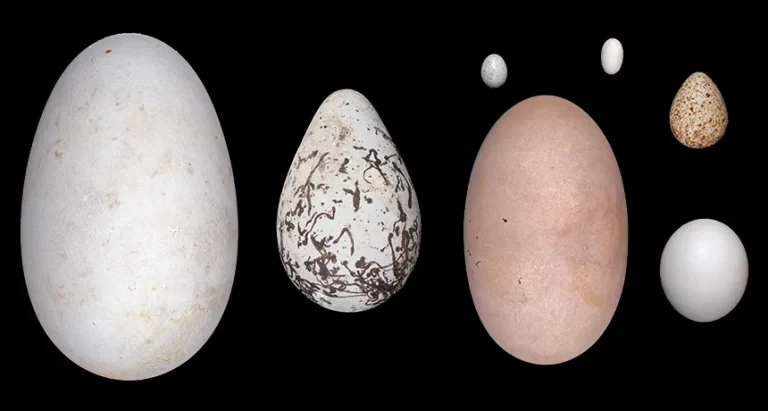
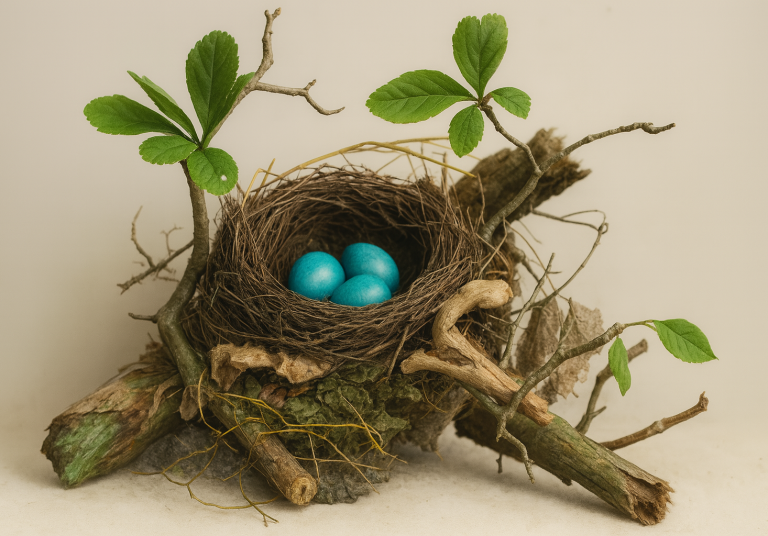
Huias were known to be remarkably tame or unwary of humans in the wild. Living in an environment originally free of mammalian predators, they evolved curious and sociable dispositions. 19th-century accounts note that huia showed little fear of people. Māori hunters could attract them by mimicking their calls, even using a polished paua shell or leaf whistle called a pūtorino to lure them in by sound. The birds often approached human observers closely, a naïveté that unfortunately made them easy targets for collectors with nets or guns. They were usually encountered in male/female pairs or small family parties, reflecting a monogamous lifestyle. In fact, huia were believed to mate for life. A bonded pair would forage in proximity and presumably coordinate raising their chicks together. They nested in cavities such as hollow tree trunks or dense shrubs, laying 2–4 eggs. The eggs were a delicate stone-grey, inclining to a grayish-white in ground color and marked with scattered speckles of purple-grey and brown concentrated at the larger end. They measured 45.5 x 28 mm. Most nesting was observed in high-altitude forest during early summer.
The vocalizations of the huia added to its aura. Although no audio recordings exist (the bird went extinct before sound recording technology reached New Zealand), written descriptions and Māori oral history give us hints. Huia calls were described as soft, melodious whistles, sometimes rendered as a repeated “uia, uia,” which is said to be the origin of its Māori name huia. They also had quiet chirring notes and, when alarmed, a “loud shrill whistle” as a distress call. To the human ear, the huia’s whistle was hauntingly beautiful. There is a late 1940s recording of an elderly Māori man imitating the huia call, preserving a ghost of its song. Together, these behaviors paint a picture of a bird supremely adapted to an ecosystem without mammalian predators: bold, sociable, and specialized in its habits.
His-and-Hers Bills in Nature’s Workshop
While the huia’s male-versus-female bill disparity was exceptional, it wasn’t a complete aberration of evolution. In fact, several other bird species around the world show analogous, if less extreme, patterns of bill dimorphism. This is a fascinating example of convergent evolution whereby distantly related species solve a problem in similar ways.
One often-cited parallel is a tiny Caribbean hummingbird, the purple-throated carib (Eulampis jugularis). Much like the huia, the female carib’s bill is significantly longer (about 30% longer) and more curved than the male’s. Research showed that on the island of St. Lucia, the two sexes prefer different species of Heliconia flowers. The male’s shorter, straighter bill fits perfectly into the tubes of one Heliconia, while the female’s longer, sickle-shaped bill matches a different Heliconia with deep curved flowers. Each sex feeds most efficiently from its “own” flower, reducing competition. A striking mirror of the huia’s male/female feeding niches, but with nectar instead of insects as the prize.
In the rainforests of Africa, the green woodhoopoe (Phoeniculus purpureus) provides another example. These crow-sized birds live in cooperative groups, and their bills are also sexually dimorphic. Interestingly, in the opposite direction of the huia’s. Male woodhoopoes have a longer, more curved bill than females (about 36% longer on average). Field observations reveal that male and female woodhoopoes split up foraging tasks. Males use their longer bills to probe into crevices of tree bark for large insects, much like the huia female did, whereas females with shorter bills do more surface pecking and gleaning on branches. Each sex thus tends to capture different sizes and types of prey. By a few months after hatching, juvenile woodhoopoes begin to show this divergence. Young males’ bills outgrow the females’, and their feeding habits diverge accordingly.
Even some woodpeckers and shorebirds show subtler versions of this phenomenon. In several island woodpecker species, males have bills 15–20% longer than females, often coupled with differences in bill depth and tongue length. This can allow male woodpeckers to excavate slightly deeper into wood for grubs, whereas females focus on shallower foraging. Among shorebirds like curlews and godwits, females typically have longer bills. In extreme cases 20–30% longer, enabling them to probe deeper in mud for worms where males cannot reach. Researchers believe this too partitions food resources between the sexes, though in some species the diets overlap considerably despite the bill differences.
What makes the huia so special is the scale of the difference. In most other birds, one sex’s bill might be a few millimeters or a few percent different in length or curvature. In the huia, the disparity was dramatic . The female’s bill was roughly twice the male’s length, slender as a rapier next to the male’s sturdy pickaxe. It is the avian equivalent of one person wielding a pair of forceps and another a crowbar. Such extreme dimorphism likely required a long period of evolutionary fine-tuning in New Zealand’s unique environment and the absence of competitors filling those same feeding niches. As Darwin noted, when he sought examples of natural selection producing differences between sexes for ecological reasons rather than mating displays, the huia provided a perfect case. Unlike most birds where bright colors or songs distinguish the sexes, in the huia it was their skeleton and toolkits. A profound reminder that evolution crafts form to follow function.
Decline and Extinction
For all its marvelous adaptations, the huia met a sad fate in the face of human impact. By the mid-19th century, when scientific interest in the species was peaking, huia populations were already in steep decline. Once ranging throughout New Zealand’s North Island, the bird had become confined to remote forest pockets by the 1870s. The causes were several and came in quick succession.
First, habitat destruction took a heavy toll. European colonists cleared vast tracts of lowland native forest for pasture and settlements, especially in the southern North Island where huia were last abundant. The huia was specialized for old-growth forests rich in decaying timber (home to the grubs they ate). As those ancient trees fell to the axe, huias lost their feeding grounds. They seemingly could not survive in young secondary-growth woods. Forest clearance in valley floors likely also eliminated the birds’ winter refuges . Observers believed huia would descend from mountain ranges to lower elevations in cold months, only to find those lowland forests converted to farms.
Next came introduced predators. Rats arrived with the first Polynesian settlers, and later waves of European-introduced stoats, ferrets, and cats invaded the forests. The huia, often feeding on or near the ground and nesting in low sites, was highly vulnerable to these new enemies. By the 1880s, as acclimatization societies released mustelids to control rabbits, huia numbers plummeted even in untouched mountain forests, suggesting unseen predation was at work. The bird’s trusting nature would have made it just as oblivious to a stealthy cat or stoat.
Finally, overhunting and collection sealed the huia’s fate. During the late 1800s, the huia became one of the world’s most coveted birds for museums and private collectors. Its dramatic sexual dimorphism and cultural significance made it a trophy specimen. Both Māori and Europeans prized huia tail feathers. For Māori, they were sacred adornments for high chiefs. For Europeans, a fashionable rarity to wear in hats after one was presented to the Duke of York in 1901. A frenzy for huia artifacts erupted. Pairs of mounted males and females together became the vogue in Victorian drawing rooms, demonstrating the “curious difference” in their beaks. This demand had lethal consequences. Hundreds of huias were killed to supply feathers and taxidermy mounts. Professional collectors scoured the remaining forests and some expeditions took astonishing numbers. In 1883, one group of Māori hunters exchanged 646 huia skins for payment, after a single organized hunt in the Manawatū area. Europeans like Andreas Reischek and Walter Buller also took large numbers for sale or museums. Several thousand specimens were ultimately exported overseas. By the 1890s, the huia’s rarity only increased its value, creating a tragic feedback loop of higher bounties and intensified hunting.
Alarm at the huia’s decline did prompt some early conservation moves. In 1892, New Zealand law extended protection to the huia, making it illegal to kill them. Māori chiefs placed traditional rāhui (temporary bans) on hunting in some areas when numbers grew low. There were even attempts to relocate a few live birds to predator-free island sanctuaries. However, enforcement was lax, and in one infamous incident the law was subverted. The very year a breeding pair was to be moved to safety on Kapiti Island, Sir Walter Buller instead shipped them to England as a gift for Lord Rothschild’s private menagerie in Tring. The remaining wild huia didn’t stand a chance against the onslaught of environmental changes. By the early 20th century, the huia had vanished. The last widely accepted sighting of a huia was on December 28, 1907, when a forest ranger reported three birds in the Tararua Ranges. In subsequent years, a few credible reports trickled in. 1922 in the southern North Island, and sporadic unconfirmed tales up to the 1960s in very remote forests. But none could be verified, and it is almost certain the huia was gone by the mid-20th century.
New Zealanders mourned the huia as a symbol of nature’s fragility. Its extinction was “poorly studied,” as one historian noted, and felt by many as a shameful loss. It also had cascading ecological effects. Huias had fed on certain fruits and helped distribute seeds and their disappearance left gaps in the forest’s life cycles. Culturally, the loss was profound for Māori, whose proverbs and songs remembered the huia’s noble status. Today the huia’s name lives on in countless Kiwi institutions, artworks, and even an iwi (tribe) named Ngāti Huia. Efforts to potentially “de-extinct” the huia via cloning were floated in the late 1990s using recovered DNA from museum specimens, but these have not advanced far. Like the bird’s mournful whistle, such hopes remain faint echoes of a bygone forest.
Conclusion
The huia’s skull tells a profound story of adaptation: how two halves of a species split the work of survival by evolving tools as different as a pickaxe and a forceps. In the damp, primeval forests of New Zealand, this dual strategy served the huia well for ages, until rapid environmental upheaval outpaced the bird’s ability to adapt. Though the huia is gone, its legacy lives on in Māori legends, in the annals of science, and in the carefully catalogued bones and replicas in museum collections. The male and female huia, forever perched on the same branch in so many dioramas, continue to teach us about the creative power of evolution and the pressing need for conservation. As we gaze upon a recreated huia skull or a mounted pair with bills so unequal yet complementary, we are reminded that every species is a unique solution to life’s challenges. The huia’s solution was as elegant as it was extraordinary. In remembering this vanished bird, we also celebrate the rich tapestry of ecological specializations that nature can produce and renew our commitment to safeguarding those that remain.
References
- Pillipps, W.J. 1963. “The Book of the Huia.” Whitcombe and Tombs Limited.
- Salvador, Rodrigo. 2021. “Why Did Male and Female Huia Have Different Beaks?” Te Papa’s Blog (Museum of New Zealand Te Papa Tongarewa), December 7, 2021.
- Shepherd, Lara. 2022. “When Did the Huia’s Bill Evolve?” Te Papa’s Blog (Museum of New Zealand Te Papa Tongarewa), July 25, 2022.
- Williams, G. R. 1966. “Huia.” In An Encyclopaedia of New Zealand, edited by A. H. McLintock. Te Ara – The Encyclopedia of New Zealand.
- Naish, Darren. 2008. “The Huia and the Sexually Dimorphic Bill.” Scientific American – Tetrapod Zoology (originally published July 2008).
- Holdaway, Richard. 2009. “Huia.” In Extinctions – Te Ara: The Encyclopedia of New Zealand. Updated March 2, 2009.
- Summers, John. 2024. “A Bird in the Hand.” New Zealand Geographic, no. 174 (Jan–Feb 2024): 116–133. (Includes account of Raymond Ching’s huia skull donations to Te Papa.)
- Museum of New Zealand Te Papa Tongarewa. Collections Online: Huia in the Te Papa Bird Collection. (Accessed 2026).
- Re-creation of Huia Calls. Nga Taonga Sound & Vision. https://www.ngataonga.org.nz/search-use-collection/search/26325/ (Accessed 2026)